
How Red Light Therapy Supports Inflammation & Recovery
Rise Mindful Healing Old Town Newhall
How Red Light Therapy Supports Inflammation & Recovery
Red light therapy has become increasingly popular for people looking to support recovery and reduce inflammation naturally.
This technology uses specific wavelengths of red and near-infrared light to support cellular repair and circulation.
At Rise Mindful Healing in Santa Clarita, red light therapy sessions are offered as part of a broader approach to stress and recovery support.
How Red Light Therapy Works
Red light therapy works by delivering light energy into the skin and underlying tissues.
These wavelengths help stimulate mitochondria — the energy centers of cells.
When mitochondria receive this light energy, they can produce more ATP, which supports cellular repair and regeneration.
This process can help improve:
Circulation
Cellular repair
Inflammation response
Tissue recovery
Benefits People Often Notice
People often explore red light therapy to support:
Muscle recovery
Joint discomfort
Inflammation reduction
Skin health
Overall recovery after exercise
Sessions are typically short and non-invasive.
Many people describe the experience as relaxing and easy to incorporate into a wellness routine.
What to Expect During a Session
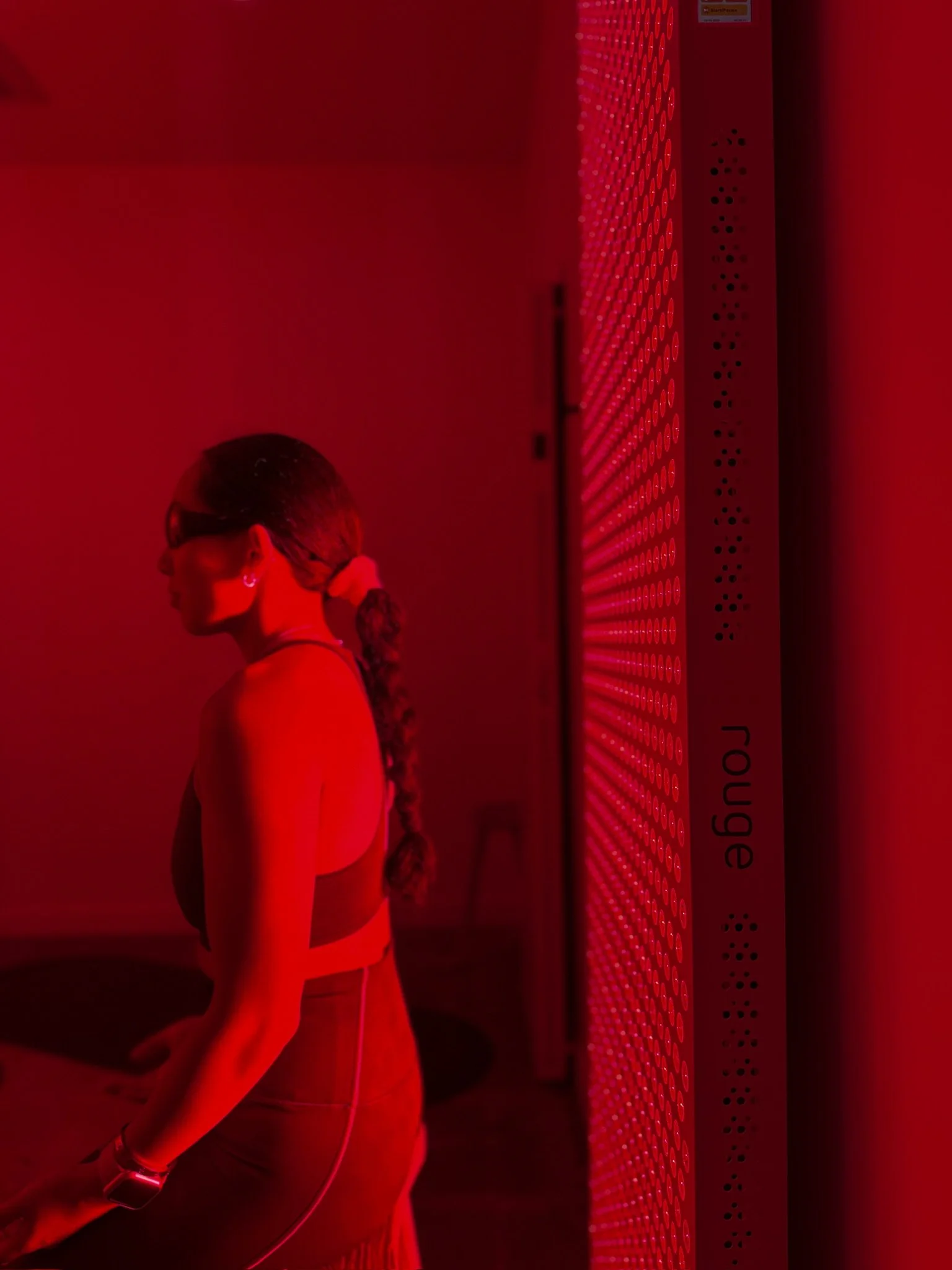
At Rise Mindful Healing, red light therapy sessions typically last around 20 minutes.
Guests relax in a shared lounge while the light panels deliver therapeutic wavelengths.
Protective goggles are worn during the session, and guests can sit, stand, or lie down comfortably.
Red Light Therapy in Santa Clarita
Red light therapy can be a supportive addition for those looking to care for their body and support recovery.
Many guests combine red light sessions with:
Infrared sauna therapy
Yoga classes
Therapeutic massage
This combination can help support both physical recovery and nervous system relaxation.